
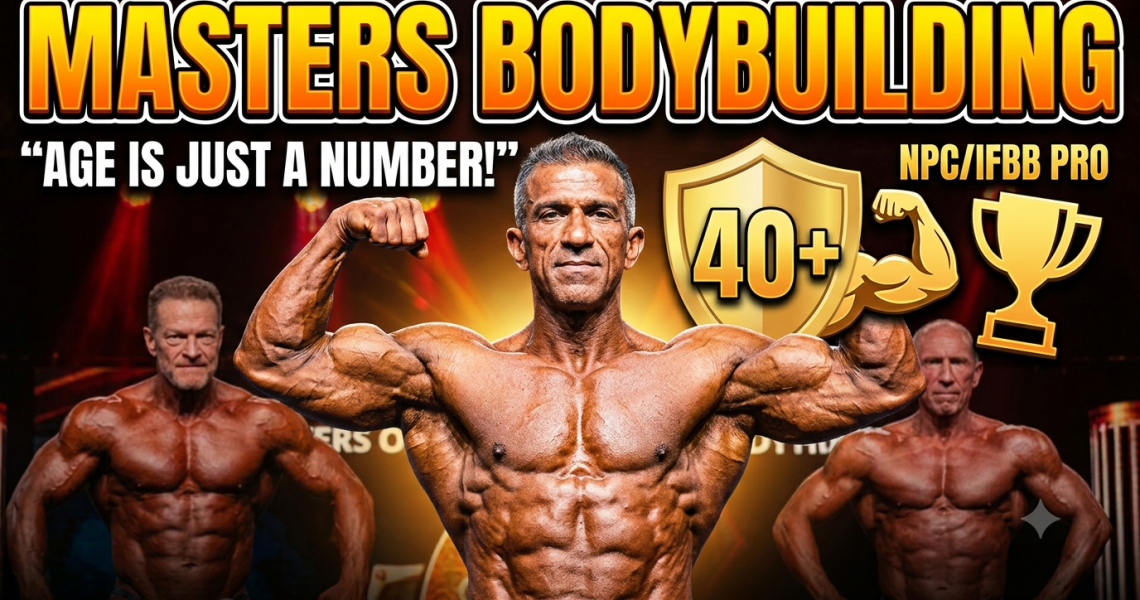
Masters Bodybuilding
August 10, 2026Masters Bodybuilding: Complete Guide to Training, Competition, and Success After 40
Masters bodybuilding proves that age doesn’t have to stop you from building an impressive physique. For athletes aged 40 and above, masters bodybuilding provides an opportunity to continue competing, improve strength and conditioning, and challenge yourself on stage.
Unlike simply training for fitness, competitive bodybuilding requires careful attention to muscle development, body composition, nutrition, recovery, posing, and competition preparation. Organizations such as the International Federation of Bodybuilding and Fitness (IFBB) include dedicated masters divisions at international competitions.
Whether you’re considering your first bodybuilding competition after 40 or you’re an experienced athlete looking for ways to maintain muscle and performance as you age, masters bodybuilding offers a unique combination of discipline, experience, and long-term fitness.
What Is Masters Bodybuilding?
Masters bodybuilding is competitive bodybuilding designed specifically for older athletes. In IFBB competitions, masters categories generally begin at age 40, with athletes separated into age and weight categories depending on the competition rules.
The purpose isn’t simply to reward the biggest athlete. Competitors are evaluated on factors such as:
- Muscular development
- Muscle symmetry
- Proportion
- Definition and conditioning
- Overall presentation
- Posing
- Stage presence
Masters competition also gives experienced athletes an opportunity to compete against others within comparable age groups rather than competing directly against younger open-category athletes.
At What Age Does Masters Bodybuilding Start?
For IFBB men’s bodybuilding, masters competition begins at 40 years old. Current IFBB rules divide masters bodybuilding into multiple age and weight categories.
Age groups can include divisions such as:
- 40–44 years
- 45–49 years
- 50–54 years
- Older masters divisions, depending on the event
Exact categories can vary by federation and competition, so athletes should always check the official rules for their specific show.
Masters Bodybuilding Categories
Age isn’t the only factor used to organize bodybuilding competitions. Weight classes may also be used.
For example, current IFBB men’s masters bodybuilding rules include weight categories within the 40–44 and 45–49 age groups, with divisions ranging from lightweight through heavyweight.
This structure helps create a more competitive environment by comparing athletes with similar ages and bodyweights.
Masters Classic Bodybuilding
Masters athletes can also compete in classic bodybuilding divisions where applicable.
Classic bodybuilding emphasizes a balanced and aesthetic physique while applying bodyweight limits based on height. The IFBB has established separate masters age categories for classic bodybuilding.
Why Start Bodybuilding After 40?
Starting bodybuilding after 40 can be challenging, but it can also be extremely rewarding.
Many athletes become more disciplined with age because they understand the importance of consistency, nutrition, sleep, and recovery.
Benefits of Masters Bodybuilding
Some potential benefits include:
- Improved muscular strength
- Better body composition
- Increased training discipline
- Greater confidence
- Improved physical fitness
- A structured fitness goal
- Opportunities to compete internationally
- A strong sense of achievement
The goal doesn’t necessarily have to be winning a trophy. Preparing for a competition can provide a powerful reason to stay consistent with training and nutrition.
How to Start Masters Bodybuilding After 40
If you’re new to bodybuilding, don’t feel pressured to train like a professional immediately.
A better approach is to build your foundation gradually.
1. Establish a Training Routine
Start with a structured resistance-training program covering all major muscle groups.
A typical program may include:
- Chest
- Back
- Shoulders
- Biceps
- Triceps
- Legs
- Calves
- Abdominals
The exact training frequency should depend on your experience, recovery capacity, schedule, and individual needs.
2. Prioritize Recovery
Recovery becomes increasingly important as training volume and intensity increase.
Make sleep, rest days, mobility work, and sensible training progression part of your routine.
3. Focus on Nutrition
A bodybuilding diet should support your training and body-composition goals.
Common priorities include:
- Adequate protein
- Fruits and vegetables
- Whole-food carbohydrates
- Healthy fats
- Sufficient hydration
- Appropriate calorie intake
Rather than following an extreme diet, work toward a sustainable nutritional strategy.
4. Learn Proper Posing
Bodybuilding isn’t only about developing muscle.
Competitors need to present their physique effectively on stage. Posing practice helps athletes demonstrate symmetry, muscularity, conditioning, and overall presentation.
The IFBB competition system includes mandatory poses for men’s bodybuilding.
5. Choose a Competition
Once you’ve developed an appropriate foundation, research competitions in your federation and region.
Check:
- Age requirements
- Weight categories
- Registration deadlines
- Qualification requirements
- Posing requirements
- Athlete registration
- Competition rules
Don’t assume every federation uses exactly the same categories.
Masters Bodybuilding Training Tips
Training after 40 doesn’t mean you have to stop pushing yourself. It does mean you should train intelligently.
Use Progressive Overload
Progressive overload can involve gradually increasing:
- Weight
- Repetitions
- Training volume
- Exercise difficulty
- Training quality
The goal is continued progress without unnecessarily increasing injury risk.
Don’t Ignore Technique
Good technique becomes especially important when training consistently over many years.
Instead of chasing weight at all costs, focus on controlled movements and effective muscle stimulation.
Manage Training Volume
More training isn’t automatically better.
If performance starts declining, soreness remains unusually high, or recovery becomes difficult, your program may need adjustment.
Include Deloads When Appropriate
A planned reduction in training volume or intensity can help some athletes manage accumulated fatigue.
Your training program should be adjusted according to your individual response.
Masters Bodybuilding Nutrition
Nutrition becomes particularly important when preparing for a bodybuilding competition.
The goal is usually to build or maintain muscle while managing body fat.
Protein
Protein provides amino acids needed for muscle maintenance and repair. Individual protein requirements depend on factors such as body weight, training status, total calorie intake, and goals.
Carbohydrates
Carbohydrates can provide an important source of training energy and may help support high-intensity workouts.
Healthy Fats
Dietary fats contribute to normal physiological functions and should not automatically be eliminated from a bodybuilding diet.
Hydration
Adequate hydration is important during both training and competition preparation.
Extreme approaches to water or electrolyte manipulation should not be attempted without qualified professional guidance.
Masters Bodybuilding Competition Preparation
Competition preparation is usually divided into several phases.
Off-Season
The focus is generally on:
- Building muscle
- Improving weak areas
- Increasing training performance
- Maintaining reasonable conditioning
Contest Preparation
As competition approaches, athletes generally focus more heavily on body composition and presentation.
This phase may involve:
- Adjusting calorie intake
- Monitoring body weight
- Maintaining resistance training
- Adding appropriate cardiovascular exercise
- Practicing posing
- Monitoring progress through photos and measurements
Peak Week
The final week before competition requires careful planning.
Because aggressive dehydration, starvation, or electrolyte manipulation can be dangerous, competitors should avoid copying extreme methods found online.
A qualified coach and healthcare professional can provide safer individualized guidance.
Challenges of Bodybuilding After 40
Masters bodybuilding can be rewarding, but it isn’t without challenges.
Older athletes may need to pay closer attention to:
- Recovery
- Joint health
- Previous injuries
- Training volume
- Sleep quality
- Stress management
- Nutrition
- Competition preparation
The biggest advantage masters athletes often have is experience. They can use years of training knowledge to make smarter decisions rather than simply training harder.
How Is Masters Bodybuilding Judged?
Bodybuilding judging focuses on the appearance and presentation of the physique.
Depending on the federation and category, judges may assess:
- Muscularity
- Symmetry
- Proportion
- Conditioning
- Muscle definition
- Posing
- Overall presentation
The IFBB maintains formal rules covering categories and competition procedures, making it important for competitors to review the rules applicable to their event.
Can You Build Muscle After 40?
Yes. Adults can continue developing muscle and strength after 40 through appropriate resistance training, nutrition, recovery, and consistency.
However, progress may not look exactly the same as it did during younger years.
The key is to focus on long-term progress rather than comparing yourself with athletes who are decades younger.
Common Mistakes in Masters Bodybuilding
Training Too Hard, Too Often
Constantly training at maximum intensity can make recovery difficult.
Ignoring Mobility
Strength and muscle development shouldn’t come at the expense of movement quality.
Cutting Calories Too Aggressively
Extreme calorie restriction can make it harder to maintain training performance and muscle mass.
Neglecting Sleep
Poor sleep can negatively affect recovery and training performance.
Copying Professional Bodybuilders
A professional athlete’s program isn’t automatically appropriate for a 40-, 50-, or 60-year-old recreational lifter.
Your training should match your experience, health status, goals, and recovery ability.
Masters Bodybuilding vs Regular Bodybuilding
The fundamentals are similar, but the competitive environment differs.
| Feature | Masters Bodybuilding | Open Bodybuilding |
|---|---|---|
| Age | Older age categories | Generally open age category |
| Competition | Age-based divisions | Open divisions |
| Training | Muscle-focused | Muscle-focused |
| Nutrition | Goal dependent | Goal dependent |
| Posing | Important | Important |
| Recovery | Often requires greater attention | Varies by athlete |
| Experience | Often a major advantage | Varies |
Masters bodybuilding doesn’t mean lowering your standards. It means competing within an age-based category designed for experienced and older athletes.
Famous Masters Bodybuilding Competitors
Masters bodybuilding has produced competitors from many countries and age groups.
IFBB historical records show masters champions competing across divisions such as 45–49, 50–54, and over-55 categories.
These athletes demonstrate that competitive bodybuilding can remain a serious pursuit well beyond the traditional peak competitive years.
Frequently Asked Questions About Masters Bodybuilding
What age is considered masters bodybuilding?
In IFBB men’s bodybuilding, masters categories begin at age 40. Specific age divisions and weight classes depend on the competition rules.
Can you start bodybuilding at 40?
Yes. You can begin resistance training and pursue bodybuilding after 40. Beginners should start gradually and prioritize proper technique, recovery, and sustainable nutrition.
Can you build muscle after 50?
Yes. Muscle and strength can still be developed after 50 with consistent resistance training, adequate nutrition, and appropriate recovery.
Is masters bodybuilding harder than regular bodybuilding?
It can be challenging because athletes must manage training and recovery carefully while preparing for competition. However, masters athletes also bring valuable experience and discipline.
What is the best workout for masters bodybuilding?
There is no single best workout for every athlete. A good program should train all major muscle groups while allowing sufficient recovery and accounting for experience, goals, and individual limitations.
Can you compete in bodybuilding after 60?
Yes, depending on the federation and event. Masters competitions can include older age divisions, and historical IFBB competitions have included athletes over 60 and 65.
Final Thoughts
Masters bodybuilding is proof that bodybuilding doesn’t have to end when you reach 40. With smart training, proper nutrition, consistent recovery, and realistic goals, older athletes can continue building impressive physiques and competing at a high level.
The most important lesson is simple: train for longevity, not just short-term results.
If you’re considering entering your first masters bodybuilding competition, start by building a strong foundation, learning proper posing, understanding your federation’s rules, and creating a realistic preparation plan.
If you found this guide useful, share it with another bodybuilding enthusiast and follow our latest fitness and bodybuilding content for more training and competition tips.
Call to Action
Ready to take your fitness journey to the next level? Start training with purpose, stay consistent, and set your next bodybuilding goal today. Your age isn’t the finish line. It can be the beginning of your strongest chapter yet.