
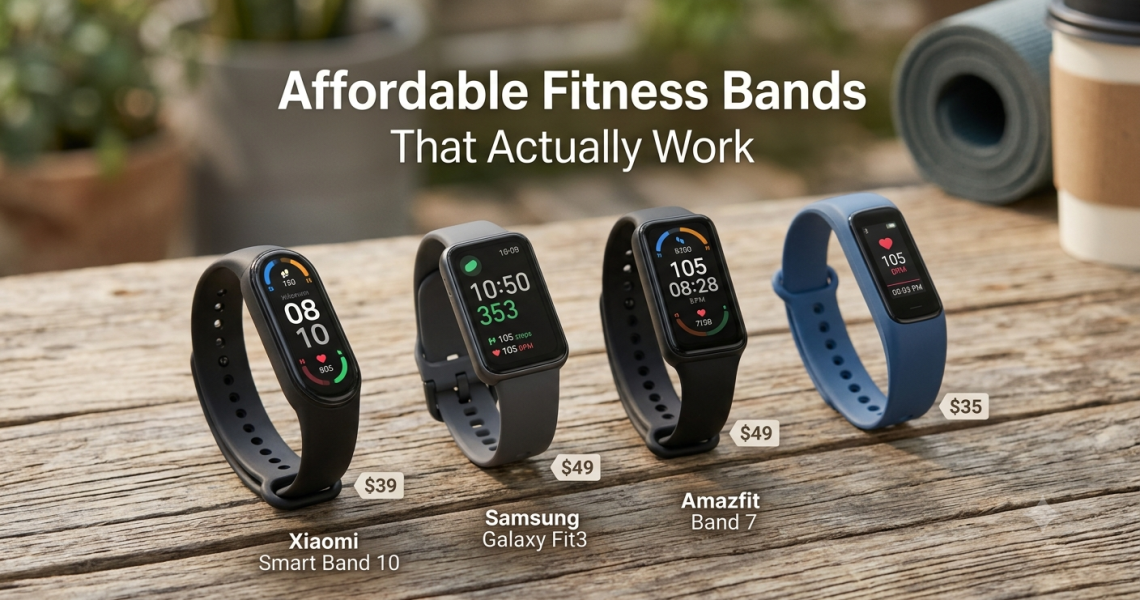
Best Budget-Friendly Fitness Bands That Actually Work
Finding a fitness band that actually helps you stay active without draining your wallet can be surprisingly difficult. The best budget-friendly fitness bands offer useful features such as step tracking, heart-rate monitoring, sleep tracking, workout modes, smartphone notifications, and long battery life, all without the premium price tag. In this guide, we explore what makes an affordable fitness tracker worth buying, which features matter most, and how to choose a reliable fitness band for everyday use.
Whether you’re starting your fitness journey, trying to monitor your daily activity, or simply want an affordable alternative to a smartwatch, the right fitness band can make a real difference.
What Is a Fitness Band?
A fitness band is a lightweight wearable device designed primarily to track health, fitness, and daily activity. Unlike full-featured smartwatches, fitness bands typically focus on essential tracking features while offering a slimmer design and longer battery life.
Depending on the model, a fitness band may track:
- Daily steps
- Distance traveled
- Calories burned
- Heart rate
- Sleep duration and patterns
- Blood oxygen levels
- Workout sessions
- Active minutes
- Stress levels
- Menstrual health
- Smartphone notifications
The biggest advantage is simplicity. You can wear a fitness band throughout the day and use the collected data to understand your activity habits and make better lifestyle decisions.
Why Choose a Budget-Friendly Fitness Band?
You don’t always need an expensive smartwatch to monitor your fitness. For many users, an affordable fitness tracker provides everything necessary to stay motivated and keep an eye on daily activity.
1. Lower Cost
Budget fitness bands are significantly more affordable than premium smartwatches. This makes them a practical option for students, beginners, casual exercisers, and anyone who wants basic health tracking without paying for features they may never use.
2. Long Battery Life
Many fitness bands can last several days between charges. Some models may offer even longer battery life depending on usage, screen brightness, and tracking features.
That’s especially useful if you don’t want to charge your wearable every night.
3. Lightweight Design
Fitness bands are generally smaller and lighter than traditional smartwatches. Their compact design makes them comfortable for:
- Walking
- Running
- Gym workouts
- Cycling
- Everyday office use
- Sleeping
4. Essential Health Tracking
A good affordable fitness band can help you monitor important activity trends, including steps, heart rate, workouts, and sleep.
However, remember that consumer wearables are generally designed for wellness and fitness tracking rather than medical diagnosis.
5. Motivation to Stay Active
Seeing your daily step count or workout progress can encourage you to move more.
Even a simple goal, such as reaching a daily step target, can turn fitness into a more engaging habit.
Best Budget-Friendly Fitness Bands: What Should You Look For?
Not every cheap fitness tracker is worth buying. Before choosing one, consider the features that matter most to you.
Step and Activity Tracking
Step tracking is one of the most basic features of a fitness band, but accuracy can vary between devices.
Look for a tracker that provides:
- Reliable step counting
- Distance tracking
- Active-minute tracking
- Daily activity goals
- Historical activity reports
If you’re primarily interested in walking and staying active throughout the day, these features may be more important than advanced smartwatch functions.
Heart-Rate Monitoring
Continuous or periodic heart-rate monitoring can provide useful information during workouts and throughout the day.
For example, you may be able to see how your heart rate changes during:
- Rest
- Walking
- Running
- Exercise
- Recovery
It’s important to remember that wrist-based heart-rate sensors can have limitations, particularly during intense movement. If you have a medical condition or need clinically accurate measurements, consult a qualified healthcare professional rather than relying on a consumer fitness band.
Sleep Tracking
Sleep tracking has become a popular feature in affordable fitness bands.
Depending on the device, you may receive information about:
- Total sleep duration
- Sleep schedules
- Sleep stages
- Nighttime movement
The best use of sleep tracking is to identify patterns over time rather than treating a single night’s data as a precise medical measurement.
Workout Modes
If you exercise regularly, check how many workout modes the fitness band supports.
Common options include:
- Walking
- Running
- Cycling
- Swimming
- Indoor workouts
- Elliptical training
- Strength training
A larger number of workout modes isn’t automatically better. Choose a device that supports the activities you actually do.
Water Resistance
Water resistance can be extremely useful for active users.
Depending on the rating, a fitness band may be suitable for:
- Sweat during workouts
- Rain
- Hand washing
- Swimming
Always check the manufacturer’s official water-resistance guidelines before using a device in a pool or shower.
Battery Life
Battery life is one of the biggest advantages of fitness bands over many smartwatches.
When comparing models, look for:
- Several days of normal use
- Convenient charging
- Fast charging, if available
- Battery-saving modes
Keep in mind that features such as continuous heart-rate monitoring, GPS, and bright displays can reduce battery life.
Smartphone Compatibility
Before buying, confirm that the fitness band works with your smartphone.
Check compatibility with:
- Android
- iPhone
- Bluetooth
- Companion mobile applications
The quality of the companion app is also important because that’s where you’ll usually review your fitness history and trends.
Best Affordable Fitness Band Features for Different Users
The “best” fitness band depends on your needs.
For Beginners
Prioritize:
- Step tracking
- Heart-rate monitoring
- Sleep tracking
- Simple mobile app
- Long battery life
- Affordable price
For Runners
Look for:
- Accurate workout tracking
- GPS or connected GPS
- Heart-rate monitoring
- Pace and distance tracking
- Water resistance
For Gym Users
Consider:
- Multiple workout modes
- Heart-rate tracking
- Calorie estimates
- Comfortable strap
- Durable construction
For Swimmers
Focus on:
- Suitable water resistance
- Swim tracking
- Secure fit
- Long battery life
For Everyday Users
A balanced fitness band with activity tracking, notifications, sleep monitoring, and a comfortable design may be the best choice.
Budget Fitness Band vs. Smartwatch
One of the most common questions is whether you should buy a fitness band or a smartwatch.
| Feature | Budget Fitness Band | Smartwatch |
|---|---|---|
| Step Tracking | Yes | Yes |
| Heart Rate | Usually | Usually |
| Sleep Tracking | Usually | Usually |
| Workout Tracking | Yes | Yes |
| Notifications | Basic | Advanced |
| Apps | Limited | More extensive |
| Battery Life | Often longer | Often shorter |
| Size | Smaller | Larger |
| Price | Lower | Higher |
If your main goal is health and activity tracking, a fitness band can provide excellent value.
If you want apps, calls, music controls, navigation, and a more advanced smartwatch experience, spending more on a smartwatch may make sense.
How to Choose the Best Budget-Friendly Fitness Band
Follow these steps before purchasing.
Step 1: Define Your Goal
Ask yourself what you actually want to track.
Do you mainly want:
- Steps?
- Walking?
- Running?
- Sleep?
- Gym workouts?
- Heart rate?
- Swimming?
Your answer will help narrow down the choices.
Step 2: Set Your Budget
Don’t automatically choose the cheapest device.
Instead, look for the best combination of:
- Price
- Features
- Reliability
- Battery life
- App quality
- Warranty
A slightly more expensive model can sometimes provide significantly better long-term value.
Step 3: Check Independent Reviews
Before buying, read reviews from multiple sources.
Pay attention to comments about:
- Sensor accuracy
- Battery performance
- App reliability
- Comfort
- Durability
- Software updates
Marketing specifications don’t always tell the complete story.
Step 4: Check the Companion App
A fitness band is only as useful as the software supporting it.
A good app should make it easy to:
- View activity history
- Understand trends
- Set goals
- Track workouts
- Manage notifications
Step 5: Consider Long-Term Value
The cheapest fitness band isn’t necessarily the best deal.
A better-value device may offer:
- Better build quality
- More reliable sensors
- Longer software support
- Better battery performance
- A more polished app
Think about how often you’ll actually use the device rather than focusing only on the purchase price.
Common Mistakes to Avoid When Buying a Cheap Fitness Tracker
Buying Based Only on Price
Low price doesn’t automatically mean good value.
A very inexpensive device may have poor sensors, unreliable software, or limited support.
Ignoring Smartphone Compatibility
Always verify that the fitness band works with your phone before purchasing.
Believing Every Health Measurement Is Medical-Grade
Fitness trackers are useful for observing trends, but many measurements are estimates.
Don’t use consumer wearable data to diagnose or treat a medical condition.
Choosing Too Many Features
More features aren’t always better.
If you only walk and track your sleep, you may not need an expensive device with dozens of workout modes.
Forgetting Comfort
You may wear your fitness band for 12 or more hours every day. A comfortable strap and lightweight design can make a major difference.
Are Budget Fitness Bands Actually Worth It?
For many people, yes.
A budget fitness band can be a smart purchase if your primary goal is to monitor daily activity and build healthier habits.
The most important benefit isn’t necessarily the technology itself. It’s the feedback.
For example, if you discover that you’re averaging only 3,000 steps a day, seeing that number may motivate you to take an evening walk. Over time, small changes can add up.
A fitness band won’t do the exercise for you, but it can help you become more aware of your habits.
Tips to Get the Most From Your Fitness Band
Once you’ve purchased your tracker, use it consistently.
Set Realistic Goals
Start with achievable activity targets and gradually increase them.
Wear It Regularly
The more consistently you wear your fitness band, the more useful your long-term activity trends become.
Review Weekly Trends
Don’t obsess over every individual reading. Look at your progress over several days or weeks.
Use Reminders
Movement reminders can help if you spend long periods sitting at work or home.
Track Your Favorite Activities
Focus on the workouts and activities you actually enjoy.
Keep the Device Updated
Install official firmware and app updates when available to improve compatibility, security, and performance.
Final Verdict: Are Budget Fitness Bands Worth Buying?
The best budget-friendly fitness bands that actually work don’t need to be packed with every smartwatch feature. They simply need to deliver reliable activity tracking, useful health insights, comfortable wearability, and dependable battery life at a reasonable price.
For beginners and casual fitness enthusiasts, an affordable fitness band can be an excellent starting point. Before buying, focus on the features you genuinely need, check independent reviews, confirm smartphone compatibility, and choose a model with a reliable companion app.
The best fitness tracker is ultimately the one you’ll actually wear and use consistently.
Ready to become more active? Compare your options, choose a fitness band that fits your lifestyle and budget, and start tracking your progress today. If you found this guide useful, share it with someone who is looking for an affordable fitness tracker, leave a comment with your favorite model, and subscribe for more practical fitness and technology buying guides.
People Also Ask: Budget-Friendly Fitness Bands
1. What is the best budget-friendly fitness band?
The best budget-friendly fitness band depends on your priorities. Look for a model that offers reliable step and activity tracking, heart-rate monitoring, sleep tracking, good battery life, comfortable design, and smartphone compatibility at a price you can afford.
2. Are cheap fitness bands accurate?
Budget fitness bands can provide useful estimates for steps, heart rate, sleep, and other activities, but accuracy varies by device and activity. They are generally best used for monitoring trends rather than making medical decisions.
3. Is a fitness band better than a smartwatch?
A fitness band can be better if you want a smaller, lighter device with longer battery life and basic fitness features. A smartwatch is generally more suitable if you want apps, advanced notifications, calls, navigation, and other smart features.
4. Can I use a fitness band without a smartphone?
Many fitness bands can record activity data without being constantly connected to a smartphone. However, you’ll typically need a compatible phone and companion app for setup, detailed data analysis, software updates, and synchronization.
5. How long does a budget fitness band battery last?
Battery life varies by model and usage. Many budget fitness bands can last several days on a single charge, while battery-intensive features such as continuous heart-rate monitoring and GPS can reduce runtime.
6. Do fitness bands really help you lose weight?
A fitness band cannot directly cause weight loss, but it can help you monitor activity and stay accountable. When combined with appropriate nutrition, regular exercise, and sustainable lifestyle changes, activity tracking may support your fitness goals.